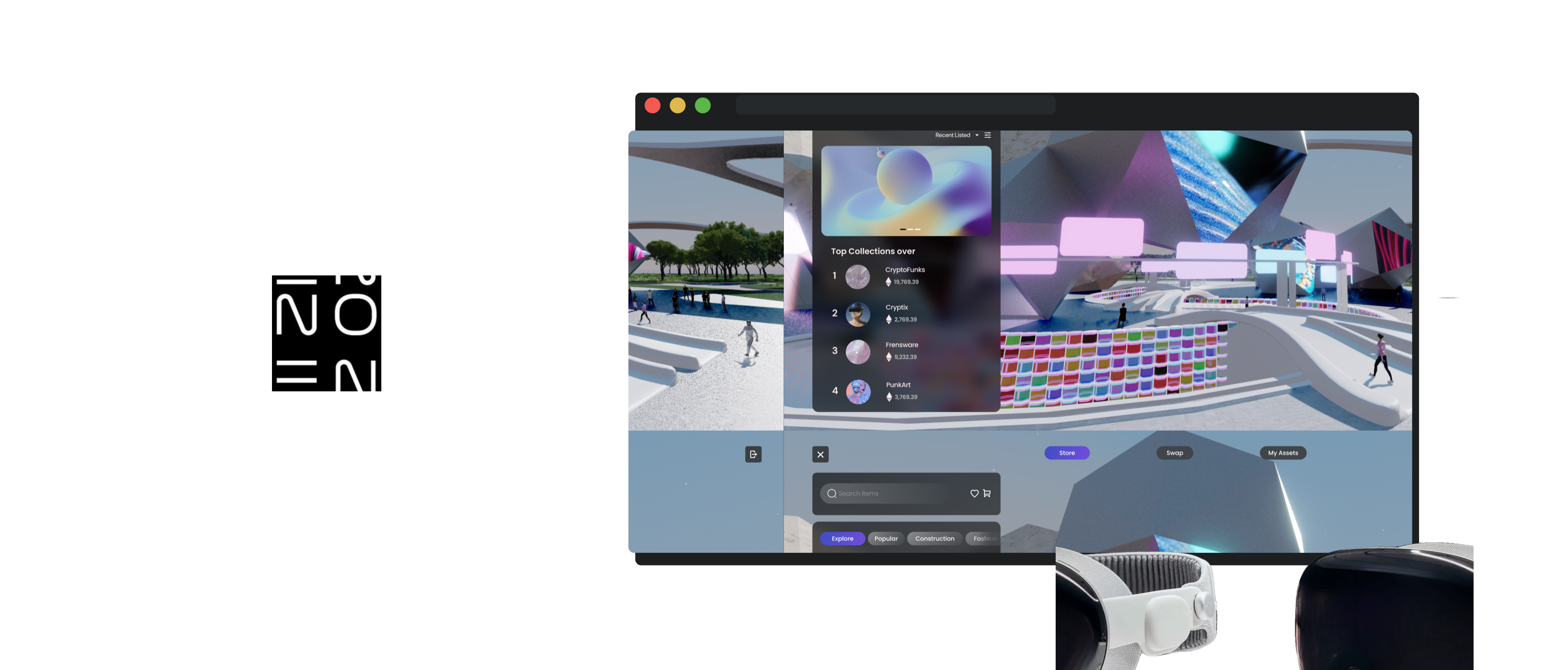
A web-based immersive experience where users could explore community worlds, interact with lifelike avatars, and create shared virtual spaces.
Interaction Designer · Prototyper
6 months · Jun 2022 to Dec 2022
Figma · Blender · Unreal
Spatial experience design and interactive prototyping
Problem
NEON had lifelike digital human technology, but needed a clearer product experience for how users would enter and interact inside a shared virtual world.
My Role
Designed the onboarding world structure, spatial navigation, 3D UI principles, and prototype interactions.
Outcome
Delivered a concept prototype that connected lifelike avatars, spatial navigation, and 3D interface behavior into a community-driven immersive experience.
NEON Worlds was designed as a user-generated immersive world where communities could gather, create, trade, and collaborate.
Insight
Open worlds feel exciting, but also disorienting
Through competitive analysis and early ideation, we saw that open virtual worlds can feel exciting but disorienting. Users need a first experience that teaches the logic of the world without feeling like a tutorial.
Direction
A shared onboarding world
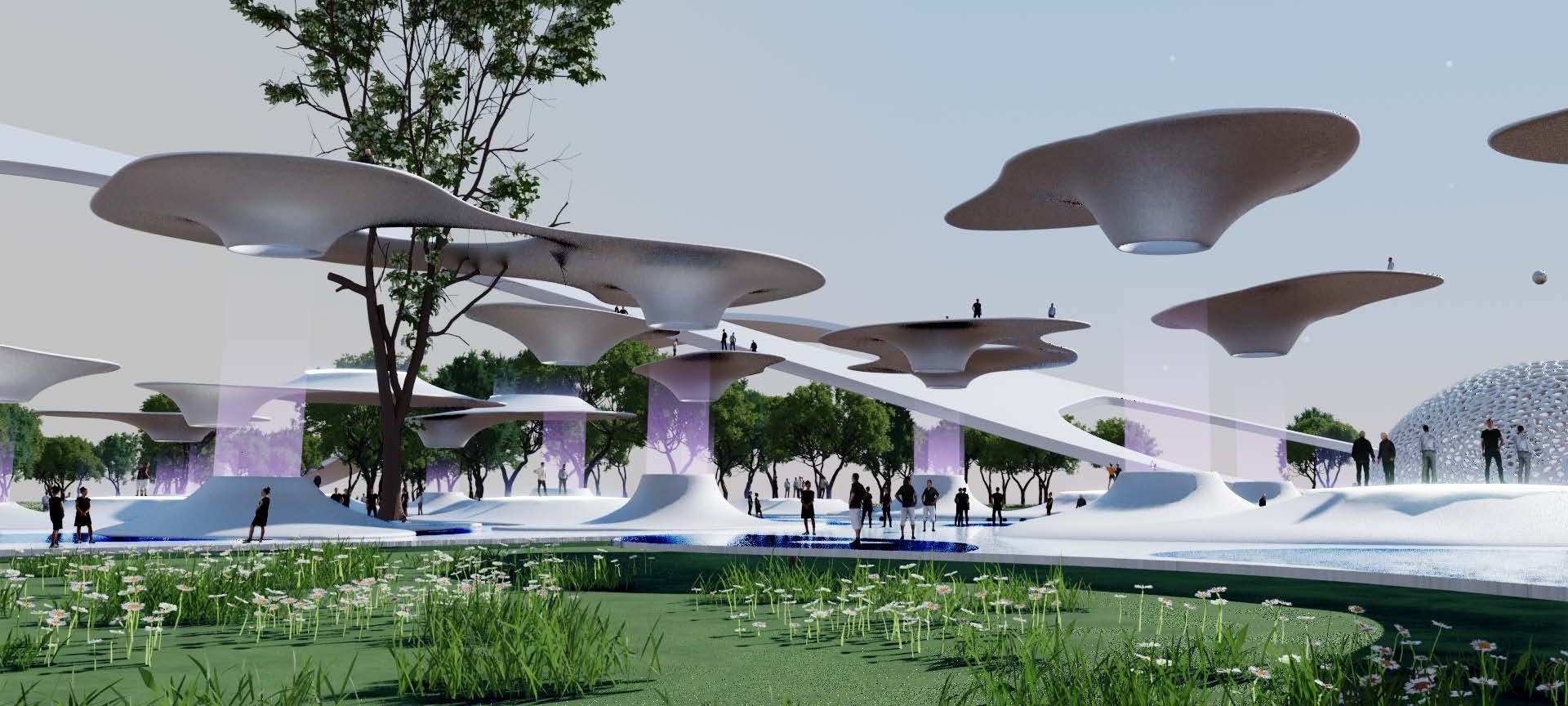
This led to the onboarding world: a shared public space where users could learn how to socialize, trade, create, and discover communities through exploration.
NEON Worlds was structured around two layers: a shared onboarding world and user-generated community worlds.
Layer 01
Onboarding world as a central park
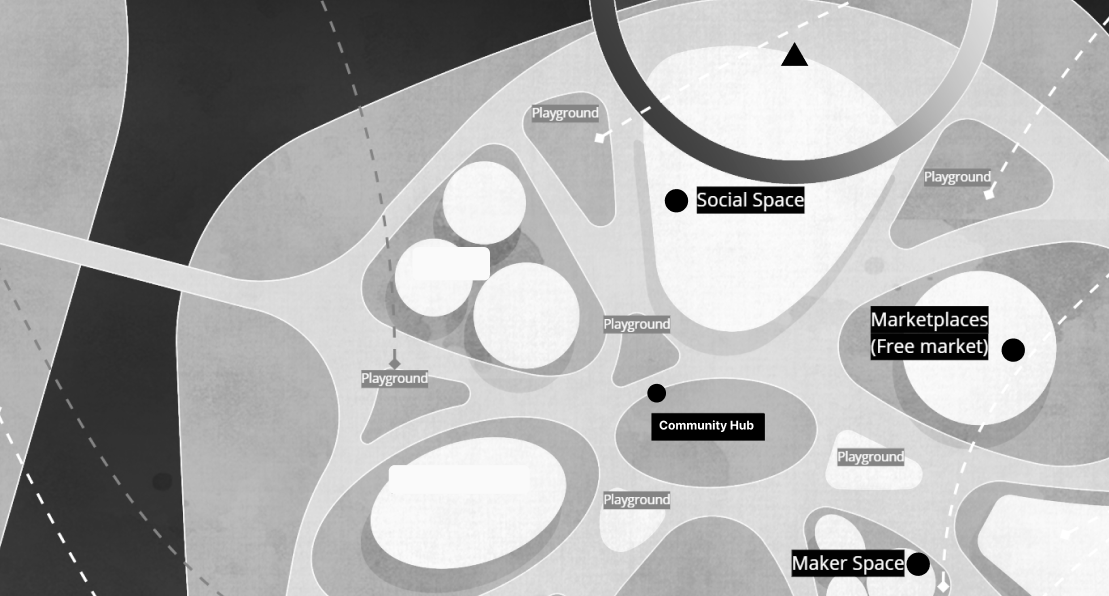
The onboarding world acted as a public entry space where users could learn the basic logic of the product before creating or joining their own communities. I designed it like a central park, with a social center at the heart of the layout and functional destinations placed around it.
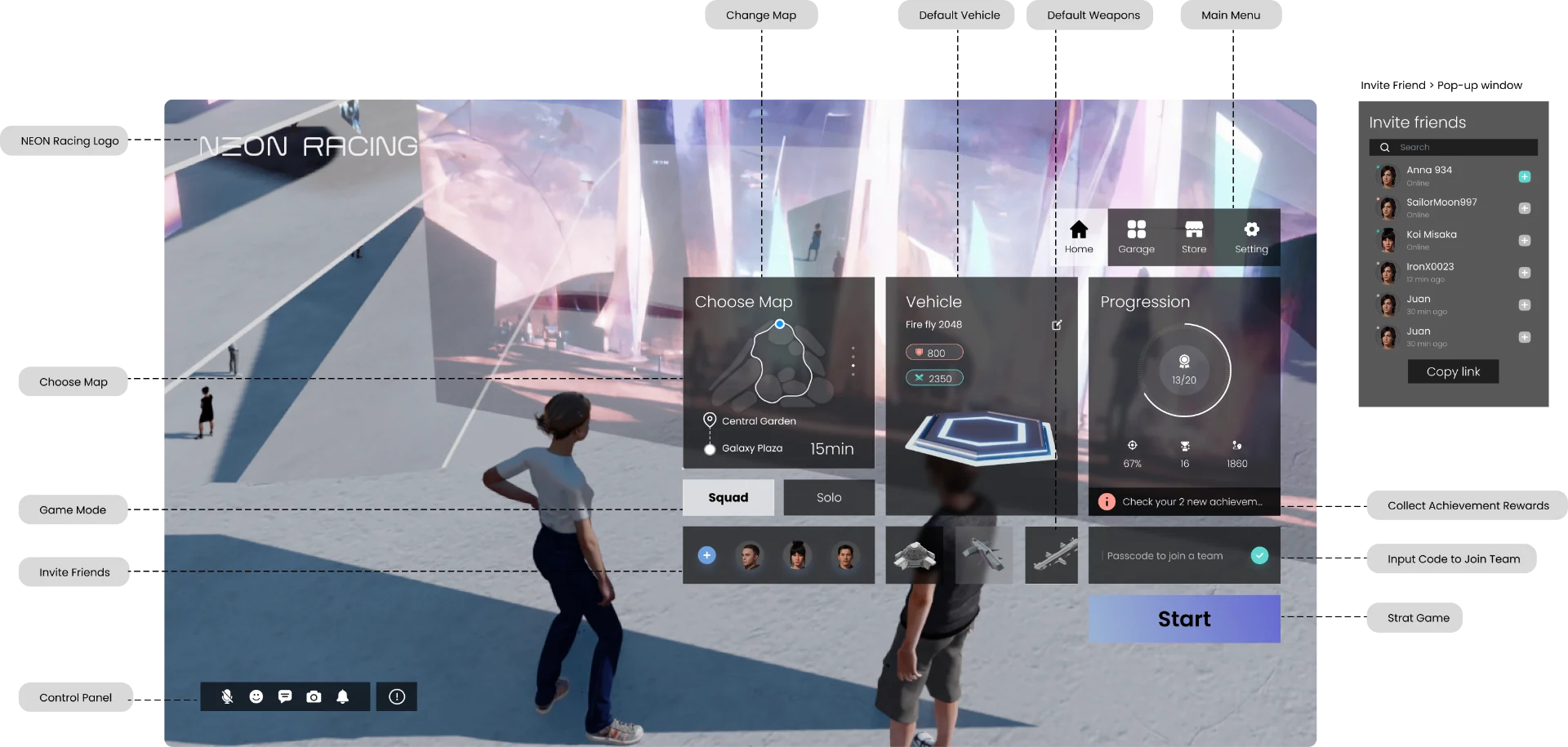
A key challenge was translating familiar 2D interface behavior into a 3D environment. I defined interaction principles for how users move between spatial exploration and interface-based tasks.
In certain moments, menus appear as spatial overlays instead of flat screens, making interface actions feel native to the world.
04 Outcome & Reflection
The final prototype brought together world structure, spatial navigation, and 3D interface behavior into one immersive experience.
Rather than showing NEON only as lifelike digital humans, the concept explored how digital humans could exist inside a broader social and creator ecosystem, where users could enter, learn, interact, and build community spaces.
Results
Defined a 2-layer world structure for onboarding and user-generated communities
Mapped 6 functional zones to guide social, creator, and marketplace behaviors
Created 3D-first UI principles for spatial navigation and interface interaction
Built an interactive concept prototype in Figma, Blender, and Unreal