VVC App design across acquisition, engagement, and loyalty — turning rewards from a number people ignore into a reason to open and use the card.
Senior Product Designer
2025
Core team of designers + PMs · 20+ Verizon stakeholders
VVC App across acquisition, engagement, and loyalty
Problem
Verizon Visa cardholders earned rewards on everyday purchases, but many didn't know what their rewards were worth, where to use them, or why they should come back to the app. Our goal: turn rewards from a number people ignore into a reason to open and use the card.
My Role
I led VVC App experience design across acquisition, engagement, and loyalty, working within the Verizon Design System. I partnered with a visual designer, PM, and copywriter, reported to an Associate Creative Director, and presented work to Verizon leadership and dev stakeholders.
Impact
Post-launch data showed an 18% lift in monthly active users, 2× offer engagement, and 35% growth in redemption across 2.3M cardholders.
Why we explored this: Verizon already knows a lot about its customers, including their plans, devices, and bills. We saw an opportunity: instead of pushing ads for the card, use AI to show each customer how the card could save them money, right inside the app they already use.
I led the design of two conversational AI flows, built as a proof of concept.
Flow 01
Bill Savings Assistant
A customer asks how to lower their bill. The AI looks at their plan and finds real ways to save, like Auto Pay discounts, the Verizon Visa Card, or a high-yield savings account. Then it asks a simple question: "How much do you spend on groceries, gas, and dining each month?" and turns the answer into a personal estimate of rewards.
Flow 02
Financial Concierge
When a customer pays off their phone, $120/month suddenly frees up. The AI notices this moment and suggests what to do with that money, like moving it into savings to earn interest and bill credits. The customer can ask "what if" questions ("What if I save $200/month?") and the numbers update instantly.
Key design decisions
How the AI earns trust
1. Show numbers, not promises: Every suggestion came with specific math, such as "$49 in interest at 4.00% APY," because when money is involved, vague claims don't build trust.
2. Mix chat with structured cards: Plain text walls are hard to compare. I designed benefit cards, tables, and tap-to-ask prompts inside the conversation, so users could scan instead of read.
3. End with clear next steps: The conversation always landed on a simple numbered plan with one clear action, never a dead end.
Where it landed
60% faster task completion in testing
We built high-fidelity prototypes and ran usability testing. Users completed key tasks 60% faster compared to the existing flow.
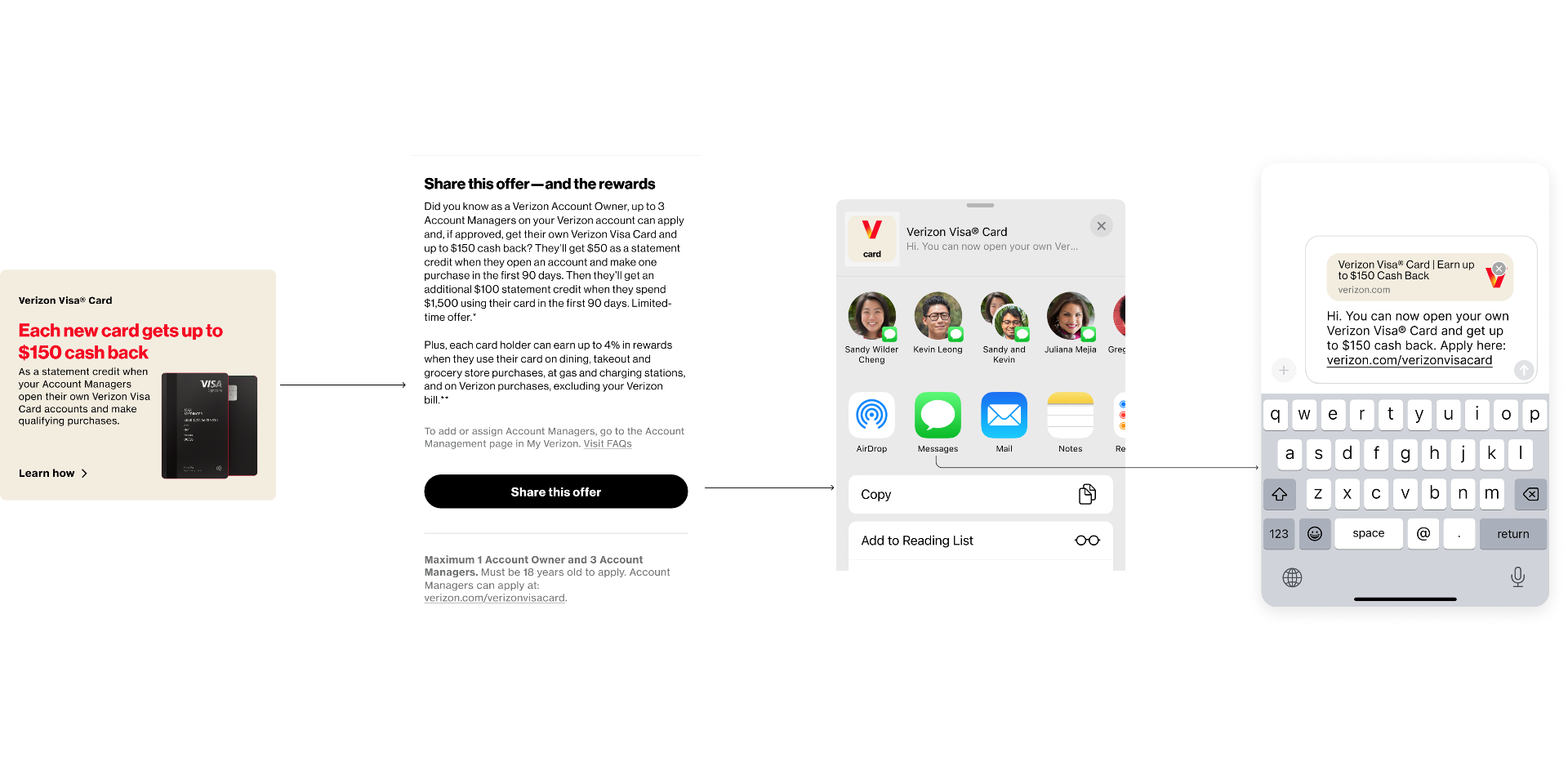
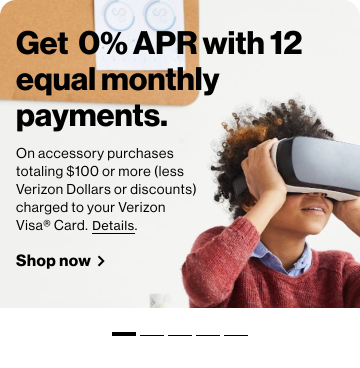
Growing the cardholder base through paid ads was expensive. A cheaper path: current cardholders who share Verizon accounts with family. I designed a promo tile and one-tap sharing flow on the Offers tab, putting the $150 new cardholder offer in front of the people most likely to share it.
Solution
Referral on the Offers tab
The problem we found: A marketing email brought a wave of users into the rewards dashboard. MAU jumped from 6% to over 25%, but 70% of them left without redeeming anything. Marketing created the interest; the product wasn't turning it into action.
The key insight: Users didn't look for a "rewards page." They went where they expected to spend: Shop, Offers, Perks. The product wasn't meeting them there.
Solution 01
Made rewards easier to understand
Redesigned how rewards, balances, and redemption options are presented across the app, so users can see what they have and what it's worth at a glance.
Solution 02
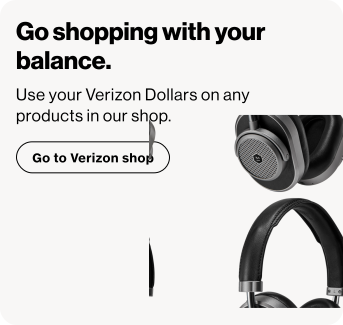
Brought redemption to where users already are
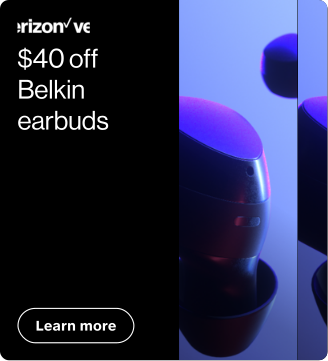
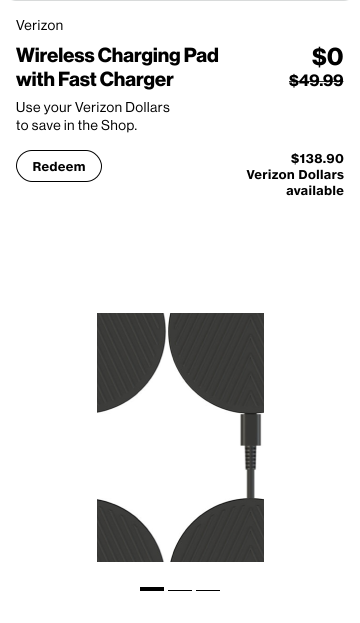
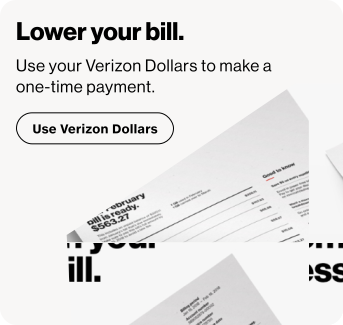
Instead of making users hunt for a rewards page, redemption now shows up in Shop, Offers, and billing, meeting users where they expect to spend.
Solution 03
Made value automatic
Auto Redeem applies rewards toward the monthly bill without users having to remember, turning rewards into value people actually feel.
04 Impact
The work covered the full life of the card — helping new customers join, making rewards feel real day to day, and giving long-term cardholders reasons to stay.
Across 2.3M cardholders, within two months of launch.